



Case
Every successful collaboration is a testament to our quality and capabilities. Learn how we provide reliable screw pumps and accessories to customers worldwide, creating value together.
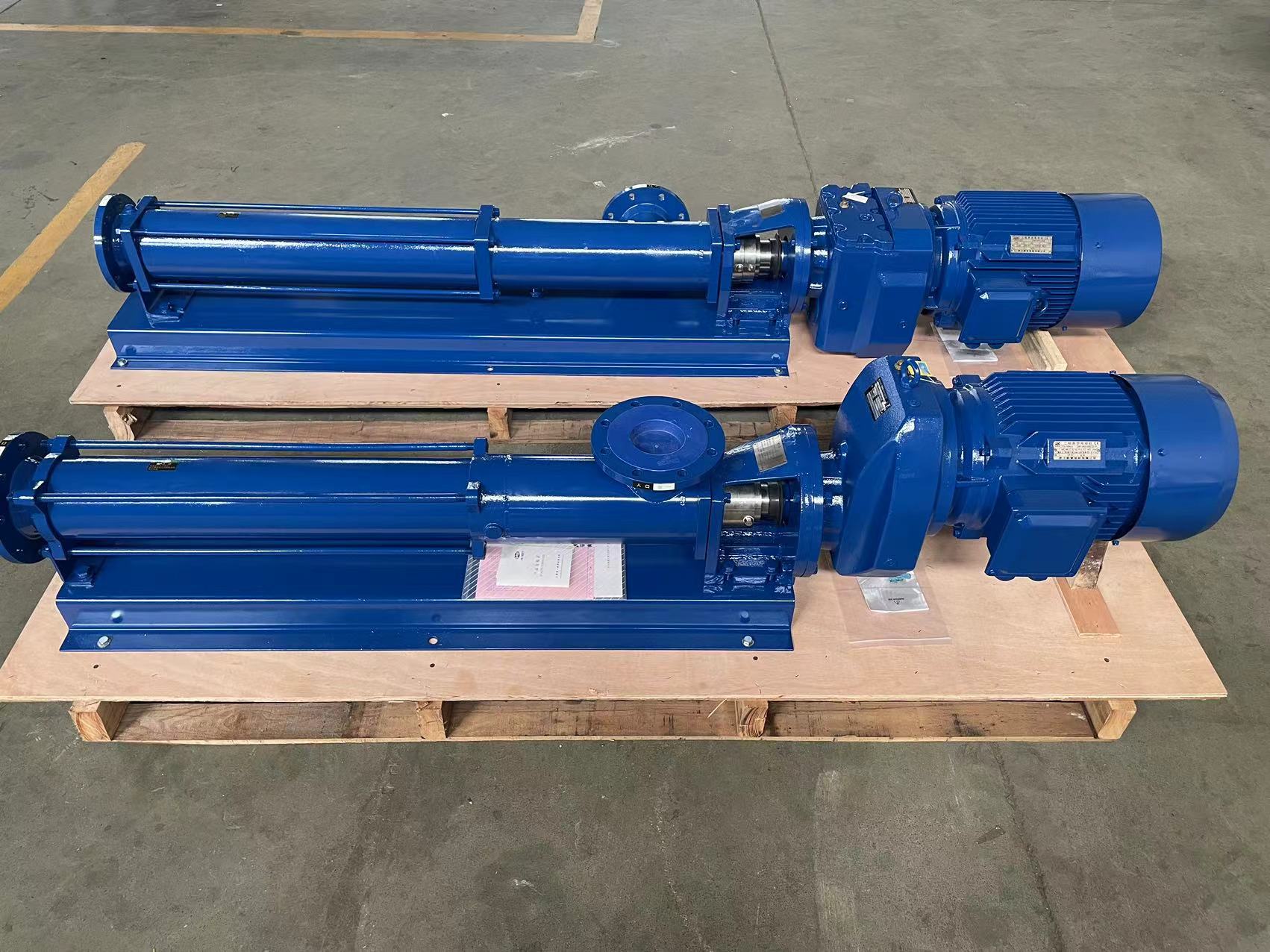
Can sewage screw pump handle corrosive sewage? In electroplating wastewater applications, the short answer is yes, but only when pump materials, sealing structure, and operating parameters are selected for the actual chemistry of the wastewater. For business evaluators, the real question is not whether a sewage screw pump can move corrosive liquid in theory, but whether it can do so reliably, economically, and with predictable maintenance over time.
Electroplating waste is rarely a simple fluid. It may contain acids, alkalis, chlorides, heavy-metal sludge, suspended solids, and fluctuating temperatures. That means the buying decision should focus on compatibility, service life, spare-parts replacement cost, and downtime risk rather than on flow rate alone. This case study explains how a progressive cavity sewage screw pump performs in that environment and how to evaluate lifecycle value before procurement.
Why electroplating wastewater is especially challenging
Electroplating wastewater is more aggressive than ordinary municipal sewage because its composition changes with process steps such as degreasing, pickling, plating, rinsing, and neutralization. The liquid may be acidic in one tank and alkaline in another, and metal ions can remain present throughout.
In many facilities, the wastewater also carries abrasive or sticky solids. Sludge from precipitation treatment, fine metal particles, and chemical residues can increase friction inside the pump cavity. Even if corrosion is controlled, abrasion can still shorten the life of the stator and rotor.
Another challenge is unstable operation. Flow may be intermittent, chemical concentration may spike, and dry running risk may appear during tank switching or low-level conditions. A pump that handles stable sewage well may fail early in electroplating service if those process realities are ignored.
Case study overview: evaluating a progressive cavity sewage screw pump
In this case scenario, a manufacturing plant needed to transfer electroplating wastewater from a collection pit to a treatment stage. The fluid contained acidic components, trace chlorides, suspended sludge, and periodic concentration fluctuations. The plant required steady low-pulsation transfer and wanted to reduce frequent maintenance associated with other pump types.
The selected solution was a progressive cavity sewage screw pump because of its ability to handle viscous media, solids-containing liquids, and flow-sensitive dosing or transfer tasks. Unlike high-speed centrifugal pumping, the single screw design offers smooth conveyance with less shear and more stable output under variable conditions.
However, the success of the application did not come from choosing the pump type alone. It depended on choosing corrosion-resistant wetted materials, matching elastomer properties to the wastewater chemistry, and ensuring spare parts could be replaced quickly without long imported-brand lead times.
Can sewage screw pump handle corrosive sewage? Yes, under the right conditions
The answer is yes, but not every configuration is suitable. A sewage screw pump can handle corrosive sewage in electroplating waste when material compatibility is verified for the actual pH range, chemical species, temperature, and solids content. If any of those variables are guessed rather than confirmed, failure risk rises quickly.
In progressive cavity pumps, the most critical corrosion and wear points are usually the rotor, stator, pump casing, shaft, joints, and mechanical seal components. If metal selection is inadequate, pitting, surface attack, or chemical degradation can reduce volumetric efficiency and trigger leakage or seizure.
Just as important, the stator elastomer must resist swelling, hardening, softening, or cracking under exposure to electroplating chemicals. A corrosion-resistant metal rotor alone does not guarantee success if the elastomer loses mechanical integrity after repeated chemical contact.
Send Us A Message